
Vaccines in Pregnancy
This page summarizes maternal immunization guidance for clinician decision support. The prescribing clinician should review current ACOG guidance, CDC/ACIP guidance, local public health recommendations, and full product labeling before administration.
Effectiveness of Immunizations
Clinical rationale: Maternal immunization protects the pregnant patient and may provide passive antibody protection to the newborn during the first months of life. Maintaining rubella and varicella immunity before pregnancy and completing postpartum vaccination when indicated remain important congenital infection prevention strategies.
“Since coming into widespread use, immunizations have saved billions of lives…” — HHS National Vaccine Program Office.
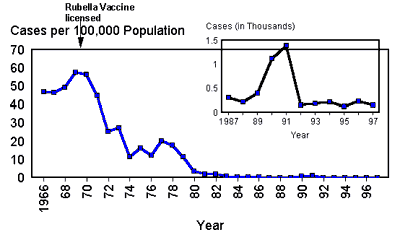
Congenital rubella syndrome can cause miscarriage, stillbirth, hearing loss, cataracts, congenital heart disease, and neurodevelopmental impairment. Because rubella-containing vaccine is live and contraindicated during pregnancy, confirm immunity before pregnancy when possible and vaccinate susceptible patients postpartum.
At-a-glance: ACOG 2026 maternal immunization schedule
ACOG's 2026 Maternal Immunization Schedule identifies influenza, COVID-19, Tdap, and maternal RSV vaccination as routinely recommended during pregnancy; pneumococcal, meningococcal, hepatitis A, and hepatitis B vaccines are recommended for selected patients based on comorbidities, disease risk, exposure risk, or vaccination history. HPV is deferred until after pregnancy. MMR and varicella are contraindicated during pregnancy and should be given postpartum when indicated. 1,2
Every pregnancy
Influenza IIV/RIV, COVID-19, and Tdap.
RSV
Pfizer Abrysvo only, 32 0/7 to 36 6/7 weeks, seasonally, first eligible pregnancy.
Risk-based
Hepatitis A, hepatitis B, pneumococcal, and meningococcal vaccination when indicated.
Do not give in pregnancy
Live MMR, live varicella, and live intranasal influenza. Defer HPV until postpartum.
| Vaccine | Pregnancy timing | Key point | Breastfeeding / postpartum |
|---|---|---|---|
| Influenza IIV or RIV | Any trimester; ideally before influenza activity increases. | Do not use live intranasal influenza vaccine during pregnancy. | Can be given while breastfeeding or postpartum. |
| COVID-19 | Any trimester; administer as soon as current-season product is available and due. | May be co-administered with Tdap, influenza, and RSV vaccines. | Can be given while breastfeeding or postpartum. |
| Tdap | Every pregnancy, preferably early in 27 to 36 weeks. | Maximizes passive pertussis antibody transfer to the infant. | If not given in pregnancy, give immediately postpartum when indicated. |
| Maternal RSV - Abrysvo | 32 0/7 to 36 6/7 weeks, September through January in most of the continental U.S. | Only Pfizer Abrysvo is recommended in pregnancy; additional maternal RSV doses are not recommended in later pregnancies at this time. | Infant monoclonal antibody is used when maternal vaccination is not given or not expected to provide protection. |
| Hepatitis A / Hepatitis B | When indicated by risk, susceptibility, age, exposure, or incomplete vaccination. | HepB vaccine is noninfectious; CDC recommends HepB vaccination in pregnancy if not already vaccinated. | Can be given while breastfeeding or postpartum. |
| Pneumococcal / Meningococcal | Selected patients with medical, travel, exposure, or outbreak indications. | Use current adult schedule and risk criteria; MenB is a precaution and usually deferred unless risk is high. | Can be initiated postpartum or while breastfeeding when indicated. |
| HPV | Not recommended during pregnancy. | If pregnancy occurs after starting series, delay remaining doses until pregnancy is completed; no intervention is needed for inadvertent vaccination. | Can be initiated or completed postpartum and while breastfeeding. |
| MMR / Varicella | Contraindicated during pregnancy. | Vaccinate postpartum if susceptible. Inadvertent administration is not an indication to terminate pregnancy. | Can be given postpartum and while breastfeeding when indicated. |
Routinely recommended vaccines during pregnancy
These vaccines can generally be co-administered at different anatomic sites when the patient is eligible and has no contraindication.
Influenza - inactivated or recombinant vaccine routine
COVID-19 vaccine routine
Tdap - tetanus toxoid, reduced diphtheria toxoid, and acellular pertussis routine
Respiratory syncytial virus (RSV) - Abrysvo routine seasonal
Vaccines for selected pregnant patients
Hepatitis A risk-based
Hepatitis B risk-based / catch-up
Pneumococcal vaccines risk-based
ACOG includes pneumococcal vaccination among vaccines for selected pregnant patients based on comorbidities or disease risk factors. Product choice should follow the current adult pneumococcal schedule and risk-based criteria.
Meningococcal vaccines risk-based / travel
Vaccines contraindicated or usually deferred in pregnancy
Human papillomavirus (HPV) vaccine defer
Measles-mumps-rubella (MMR) live - contraindicated
Varicella vaccine live - contraindicated
Zoster - recombinant zoster vaccine (Shingrix) usually defer
There is no ACIP recommendation for routine recombinant zoster vaccine use during pregnancy. Consider delaying until after pregnancy when indicated. 11
Travel and special-situation vaccines
Generally usable if indicated
- Rabies: post-exposure prophylaxis should not be delayed because of pregnancy.
- IPV: may be given if immediate protection is needed for travel or outbreak exposure.
- MenACWY: pregnancy should not preclude use when indicated.
- Tick-borne encephalitis: may be used when exposure risk is substantial.
Usually avoid unless risk is high
- Yellow fever: precaution; consider vaccination or medical waiver based on destination risk.
- Japanese encephalitis: defer unless risk of exposure is high and unavoidable.
- Typhoid: use Vi polysaccharide only if clearly needed; live Ty21a is contraindicated.
- Cholera: limited data; consider only when exposure risk is substantial.
Anthrax - BioThrax / Cyfendus special situation
Pre-event vaccination should generally be deferred during pregnancy when exposure risk is low. In a post-event setting with high-risk aerosolized anthrax exposure, pregnancy is neither a precaution nor a contraindication to post-exposure prophylaxis; follow public health incident guidance for AVA plus antimicrobial therapy. 11,15
Chikungunya travel / occupational
Cholera - Vaxchora travel
Japanese encephalitis - Ixiaro travel
Polio - IPV travel / outbreak
Rabies vaccine post-exposure urgent
Tick-borne encephalitis - TICOVAC travel / outdoor exposure
Typhoid travel
Yellow fever - YF-VAX live - precaution
Counseling and documentation prompts
Before administration
- Confirm gestational age, prior vaccine history, allergy/anaphylaxis history, and acute illness status.
- Check product: Abrysvo only for maternal RSV; IIV/RIV only for influenza in pregnancy.
- Document lot number, manufacturer, route, site, VIS date, and counseling.
Suggested chart phrase
Maternal immunization reviewed using ACOG/CDC guidance. Benefits, expected local reactions, rare adverse events, contraindications, and timing reviewed. Vaccine administered as documented; patient advised to report concerning symptoms.
References and authoritative links
- American College of Obstetricians and Gynecologists. Maternal Immunizations. Committee Statement No. 26. 2026. ACOG Committee Statement
- American College of Obstetricians and Gynecologists. 2026 Maternal Immunization Schedule. ACOG schedule
- American College of Obstetricians and Gynecologists. Influenza in Pregnancy: Prevention and Treatment. Practice Advisory. 2025. ACOG link
- American College of Obstetricians and Gynecologists. COVID-19 Vaccination Considerations for Obstetric-Gynecologic Care. Practice Advisory. ACOG link
- American College of Obstetricians and Gynecologists. Update on Immunization and Pregnancy: Tetanus, Diphtheria, and Pertussis Vaccination. Committee Opinion No. 718. ACOG link
- American College of Obstetricians and Gynecologists. Maternal Respiratory Syncytial Virus Vaccination. Practice Advisory. ACOG link
- American College of Obstetricians and Gynecologists. Viral Hepatitis in Pregnancy. Clinical Practice Guideline No. 6. 2023. ACOG link
- American College of Obstetricians and Gynecologists. Human Papillomavirus Vaccination. Committee Opinion No. 809. 2020. ACOG link
- American College of Obstetricians and Gynecologists. Measles, Mumps, Rubella Vaccination and Management of Obstetric-Gynecologic Patients During a Measles Outbreak. Practice Advisory. 2024. ACOG link
- American College of Obstetricians and Gynecologists. Cytomegalovirus, Parvovirus B19, Varicella Zoster, and Toxoplasmosis in Pregnancy. Practice Bulletin No. 151. 2015. ACOG link
- Centers for Disease Control and Prevention. Guidelines for Vaccinating Pregnant Women. Updated 2025. CDC link
- Centers for Disease Control and Prevention. RSV Vaccine Guidance for Pregnant Women. CDC link
- Centers for Disease Control and Prevention. Pneumococcal Vaccine Recommendations. CDC link
- Centers for Disease Control and Prevention. Adult Immunization Schedule Notes: Meningococcal Vaccination. CDC link
- Centers for Disease Control and Prevention. Guidelines for the Prevention and Treatment of Anthrax, 2023. MMWR Recommendations and Reports. CDC MMWR
- Centers for Disease Control and Prevention. Chikungunya Vaccines. CDC link
- U.S. Food and Drug Administration. IXCHIQ. FDA link
- Centers for Disease Control and Prevention. CDC Yellow Book: Pregnant Travelers. CDC Yellow Book
- DailyMed. U.S. National Library of Medicine. DailyMed home
Reviewed: 06/28/2026. This page should be rechecked whenever ACOG, CDC/ACIP, FDA, local public health, or product labeling updates occur.