Gestational Diabetes (GDM)
High blood sugar that starts during pregnancy
Gestational diabetes means your blood sugar is higher than it should be during pregnancy.
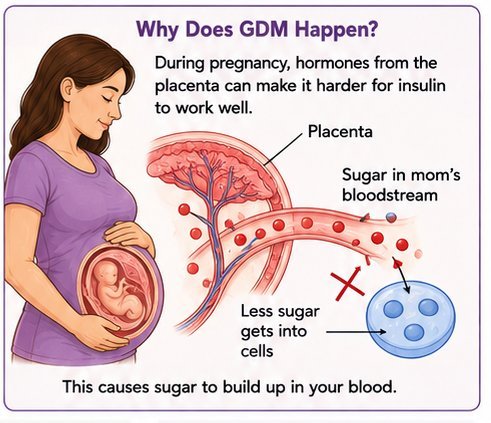
The placenta makes hormones that help the baby grow. These hormones can make insulin work less well. Insulin helps move sugar from your blood into your cells.
If your body cannot make enough extra insulin, sugar builds up in your blood. One food or one meal does not cause GDM.
Your blood sugar goals
Common ADA and ACOG goals are:
- Before breakfast: under 95 mg/dL
- 1 hour after a meal: under 140 mg/dL
- 2 hours after a meal: under 120 mg/dL
Check as often as your care team tells you.
Why does control matter?
If blood sugar stays high:
- the baby may grow too large
- birth injury or C-section can be more likely
- the baby can have low sugar after birth
- you have a higher chance of preeclampsia
- you have a higher chance of type 2 diabetes later
Foods to choose more often
- vegetables
- whole fruit instead of juice
- beans and lentils
- whole grains
- eggs, fish, chicken, tofu, or other lean protein
- nuts, seeds, and healthy fats
Eat regular meals. A dietitian can help make a plan for you.
Foods and drinks to limit
- soda, sweet tea, sports drinks, and juice
- candy, cookies, cake, and donuts
- sweet cereal
- large servings of white bread, white rice, or regular pasta
- fried and highly processed foods
Do not cut out all carbohydrates. Pregnancy needs a balanced diet.
Treatment
- healthy food choices are the first step
- if safe for you, aim for activity most days
- a 10–15 minute walk after meals may help
- check and record your blood sugar
- if sugar stays high, insulin is the preferred medicine
How we watch you and your baby
- your numbers are reviewed at visits
- an ultrasound may check the baby's growth
- if you need medicine or sugars stay high, baby heart-rate tests often start around 32 weeks
- if food alone keeps sugars normal, routine heart-rate testing may not be needed
After your baby is born: Your blood sugar usually improves quickly. ADA recommends a 75-gram glucose test 4-12 weeks after delivery, then diabetes testing every 1
- 3 years. Breastfeeding is encouraged. Your delivery plan will depend on your blood sugar, medicines, baby's growth, and other pregnancy findings.
Medical references used for this handout
- American Diabetes Association. Standards of Care in Diabetes ”2026, Section 15: Management of Diabetes in Pregnancy.
- American College of Obstetricians and Gynecologists. Practice Bulletin No. 190: Gestational Diabetes Mellitus. Reaffirmed 2026.
- ACOG. Gestational Diabetes patient guidance.
- ACOG. Indications for Outpatient Antenatal Fetal Surveillance.