PERINATOLOGY.com
Patient Handout

Preeclampsia

A serious blood pressure problem in pregnancy

What is preeclampsia?

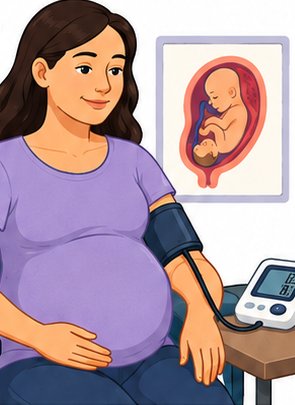
Preeclampsia is high blood pressure that can start after 20 weeks of pregnancy or after birth. It can affect the mother, the placenta, and the baby. Some people feel sick. Some have no symptoms.

Warning signs

  • headache
  • vision changes
  • swelling of the face or hands
  • pain under the right ribs
  • nausea or vomiting
  • shortness of breath

You can have preeclampsia even if you do not feel sick.

What do severe features mean?

Severe features mean the blood pressure problem is more serious and may be hurting the body or the baby.

  • blood pressure 160/110 or higher
  • bad headache that will not go away
  • vision changes
  • pain in the upper belly or right side
  • trouble breathing
  • blood tests show that the liver, kidneys, or blood are affected

What happens next?

  • blood pressure checks
  • urine and blood tests
  • ultrasound and baby heart-rate testing
  • medicine to lower blood pressure
  • magnesium sulfate may be used to help prevent seizures
  • hospital care may be needed

When should I get help right away?

Get medical help right away for:

  • blood pressure 160/110 or higher
  • a severe headache
  • vision changes
  • severe upper belly pain
  • trouble breathing
  • a seizure
  • less baby movement later in pregnancy

What about delivery?

Birth may be needed if preeclampsia becomes worse or if the baby is not doing well. Severe disease often needs earlier delivery.

After birth

Preeclampsia can start or get worse after delivery. Keep your follow-up visits and blood pressure checks.

With early care and close watching, many mothers and babies do well.

References

  • American College of Obstetricians and Gynecologists. Gestational Hypertension and Preeclampsia. Practice Bulletin No. 222. Obstet Gynecol. 2020;135:e237-e260. Reaffirmed guidance.
  • Society for Maternal-Fetal Medicine. Clinical guidance on hypertensive disorders of pregnancy and severe hypertension.
  • Centers for Disease Control and Prevention. High Blood Pressure During Pregnancy.

This handout is for patient education and does not replace medical care.