Clubfoot
When a baby's foot points inward and downward
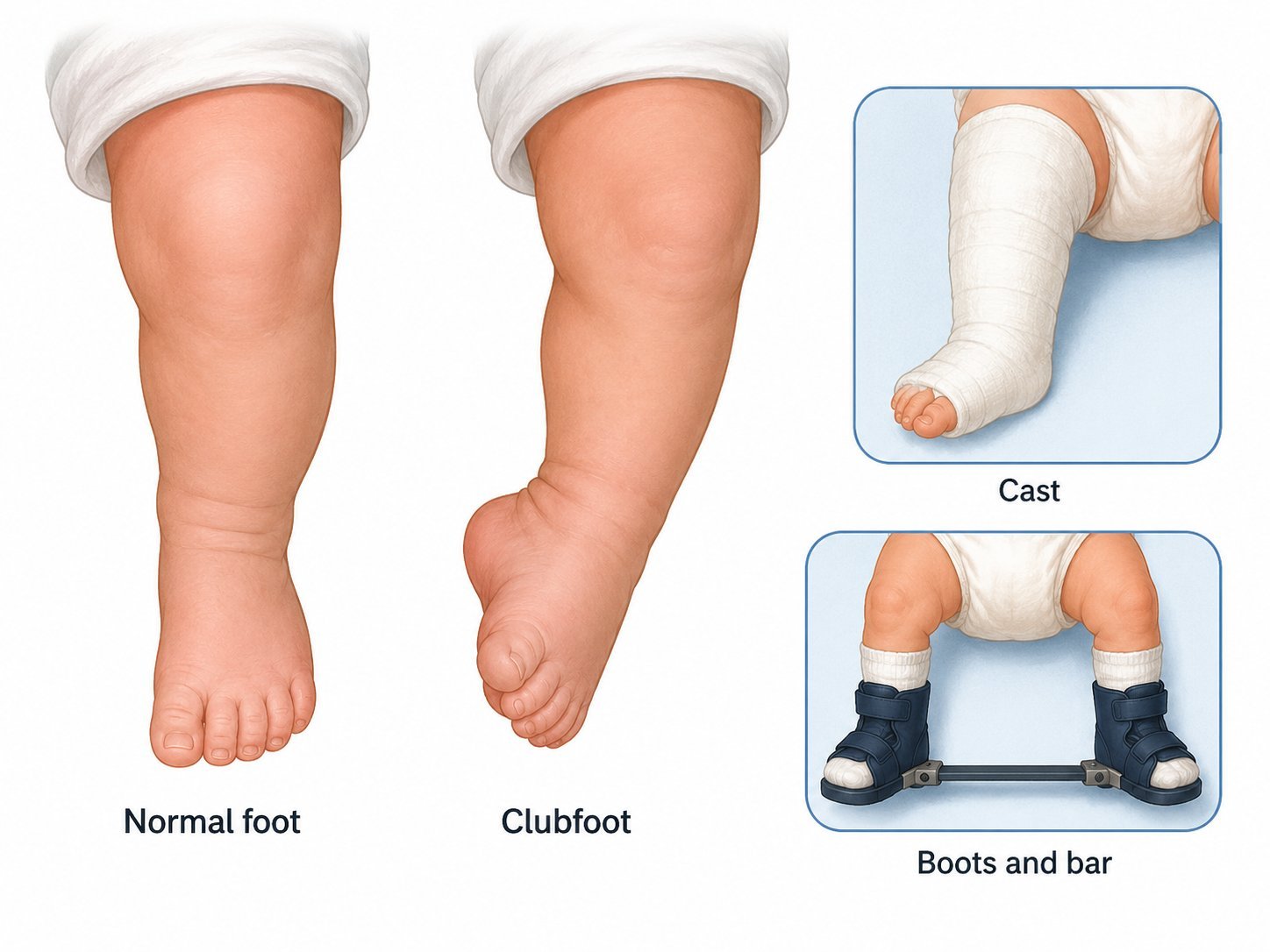
Clubfoot, also called talipes equinovarus, means a baby's foot points inward and downward.
It can affect one foot or both feet.
Isolated clubfoot means no other problem was seen on the detailed ultrasound.
Most babies do very well after treatment.
Why can this happen?
- often there is no single known cause
- genes or chromosome conditions can sometimes play a part
- clubfoot can also occur with problems of the spine, brain, muscles, or joints
What tests may be offered?
- a detailed ultrasound of the whole baby
- careful views of the spine, brain, heart, and limbs
- genetic counseling and diagnostic testing, such as amniocentesis, may be offered
- other imaging may be used if another problem is suspected
What does this mean for pregnancy?
- if clubfoot is isolated, the outlook is usually very good
- no treatment is needed before birth
- birth plans usually do not need to change
- you may meet a children's orthopedic specialist before delivery
What happens after birth?
The usual treatment is the Ponseti method:
- gentle stretching and a series of casts
- many babies also need a small heel-cord procedure
- after casting, a boots-and-bar brace helps keep the foot corrected
What should parents expect next?
- the brace is worn most of the day at first, then during sleep
- brace use often continues until about age 4 to 5 years
- using the brace as directed lowers the chance that clubfoot will return
What can I expect later?
- most children have a foot that works well and does not hurt
- the calf or foot may remain a little smaller
- many children walk, run, play, and wear regular shoes
Important: Sometimes a foot looks turned only because of the baby's position. A repeat ultrasound can help confirm true clubfoot and check the rest of the baby.
Medical references and guidance
- Society for Maternal-Fetal Medicine. Fetal Anomalies Consult Series #2: Extremities, including congenital talipes equinovarus (clubfoot). 2019.
- American Academy of Orthopaedic Surgeons (OrthoInfo). Clubfoot.
- Centers for Disease Control and Prevention. Talipes equinovarus (clubfoot) overview.