Cystic Hygroma
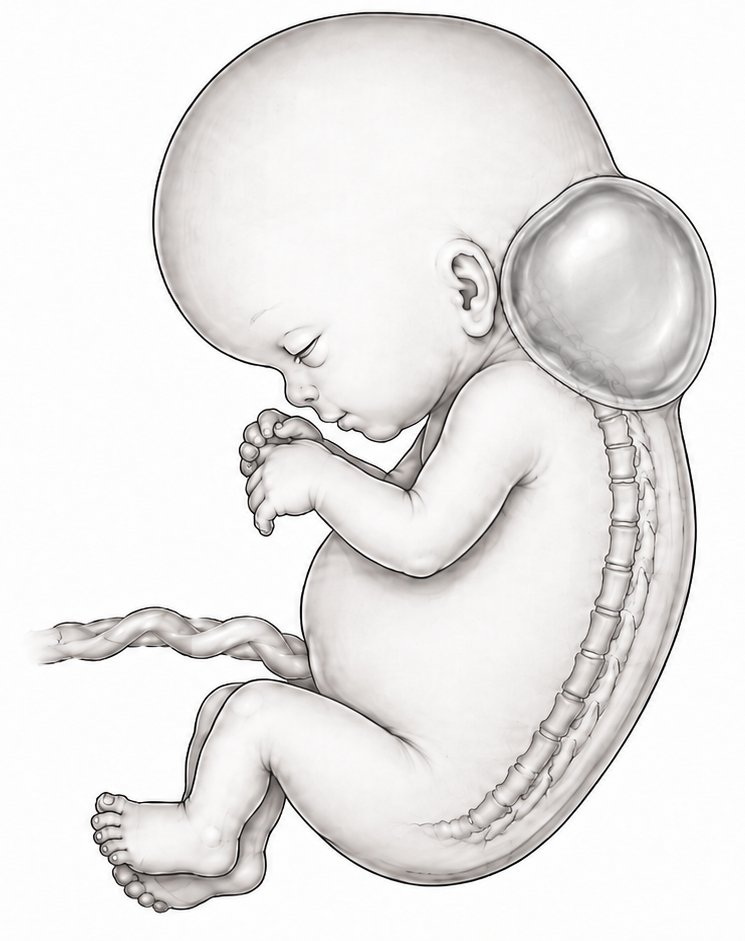
A cystic hygroma is a fluid-filled space at the back or side of the baby's neck.
It starts in the lymph system, a group of tiny tubes that moves clear fluid through the body.
If these tubes do not join as expected, fluid can collect near the neck. It may be seen early in pregnancy.
Risk of a chromosome change
Aneuploidy means the baby has an extra or missing chromosome.
About 6 out of 10 babies with a cystic hygroma have a chromosome change.
These can include Turner syndrome, Down syndrome, trisomy 18, or trisomy 13.
What genetic tests may be offered?
- genetic counseling
- CVS or amniocentesis to test the baby's chromosomes
- a chromosome microarray to look for smaller missing or extra pieces
- if results are normal, testing for Noonan syndrome or other gene changes may be discussed
Is NIPT enough?
NIPT is a blood screening test. It estimates the chance of some chromosome problems.
It is not a diagnosis and does not check for every cause of cystic hygroma.
CVS or amniocentesis can give a more certain answer.
What ultrasound checks are needed?
- an early check of the baby's body may be offered
- a detailed anatomy scan is done at 18 to 22 weeks
- a fetal echocardiogram checks the baby's heart
- ultrasound is often repeated about every 4 weeks
What other problems can occur?
Heart problems are the most common, but other parts of the body can also be affected.
Even with normal chromosome tests, a major body problem is found in about 1 to 3 out of 10 babies.
Fluid can also collect in other parts of the body. This is called hydrops.
What is the outlook?
The outlook is different for each baby.
Some cystic hygromas get smaller or go away. Normal genetic tests, normal heart and body scans, and no hydrops are good signs.
A growing hygroma, hydrops, or other problems can raise the risk of pregnancy loss or serious illness after birth.
Medical references
- International Society of Ultrasound in Obstetrics and Gynecology. Cystic Hygroma: Patient Information. Updated May 2022.
- Assiri A, Bonin B. Cystic Hygroma. VISUOG, International Society of Ultrasound in Obstetrics and Gynecology. Updated August 2025.
- American College of Obstetricians and Gynecologists. Current ACOG Guidance: Non-Invasive Prenatal Testing. Accessed August 2026.
- Malone FD, et al. First-trimester septated cystic hygroma. Obstet Gynecol. 2005;106:288-294.