Oligohydramnios
Too little amniotic fluid around the baby
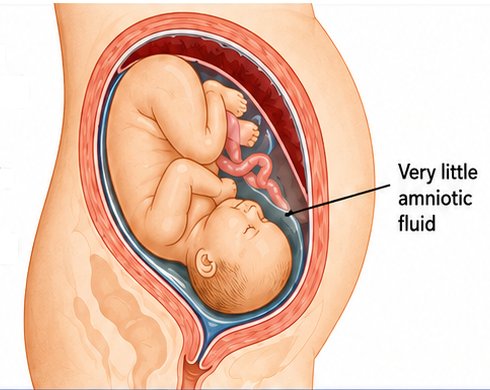
Amniotic fluid is the liquid around the baby. It helps protect the baby and gives the baby room to move and grow.
Oligohydramnios means there is less fluid than expected. Ultrasound is used to measure the fluid.
What happens next depends on why the fluid is low and how far along the pregnancy is.
Translation friendly: This handout uses plain text, simple headings, and short sentences so it works well with browser translation tools.
Why can fluid be low?
- the water bag may leak or break
- the placenta may not work as well
- the baby may have a kidney or urine problem
- the pregnancy may be past the due date
- sometimes no cause is found
What happens next?
- repeat ultrasound
- check the baby's growth
- check for leaking fluid
- baby heart-rate testing may be done
- more visits may be needed
What can low fluid mean?
Little or no fluid very early in pregnancy can affect the baby's lung growth.
Later in pregnancy, low fluid may raise the chance of cord pressure or the need for earlier birth.
When may birth be needed?
Birth may be recommended earlier if the fluid stays very low, the placenta is not working well, or the baby's testing is not reassuring.
Your doctor will choose the safest time for you and the baby.
Call your care team or go to the hospital right away for leaking fluid, bleeding, fever, regular contractions, severe pain, or less baby movement.
Important: Do not try to treat low fluid by drinking very large amounts of water unless your clinician tells you to. Follow the plan made for your pregnancy.