Polyhydramnios
Too much amniotic fluid around the baby
Polyhydramnios means there is more amniotic fluid than expected around the baby.
Many cases are mild. In many mild cases, no cause is found and the pregnancy does well.
Ultrasound is used to measure the fluid and look carefully at the baby.
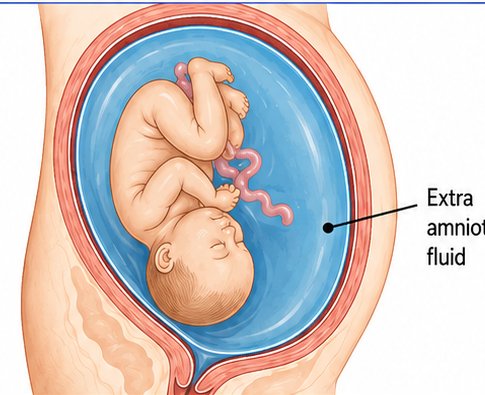
Why can fluid be high?
- diabetes in pregnancy
- the baby may have trouble swallowing fluid
- some birth differences or gene problems
- twins, infection, or blood problems
- often no cause is found
What happens next?
- a detailed ultrasound may be done
- you may be tested for diabetes
- the baby's growth and fluid are checked
- more testing may be offered if another finding is seen
What can too much fluid mean?
More severe fluid can raise the chance of early labor, the baby being in a different position, or the cord coming down after the water breaks.
Heavy bleeding after birth is also more common.
Will I need treatment?
Mild cases often need only follow-up.
If severe fluid causes major pain or trouble breathing, a specialist may remove some fluid. Severe cases may need care at a hospital with special services.
Call your care team or go to the hospital right away for regular contractions, trouble breathing, severe belly pain, bleeding, your water breaking, or less baby movement.
Important: If mild polyhydramnios is the only problem, extra fetal testing is not always needed just because of the fluid. Your own plan depends on the full pregnancy picture.