Short Cervix
When the cervix is shorter than usual
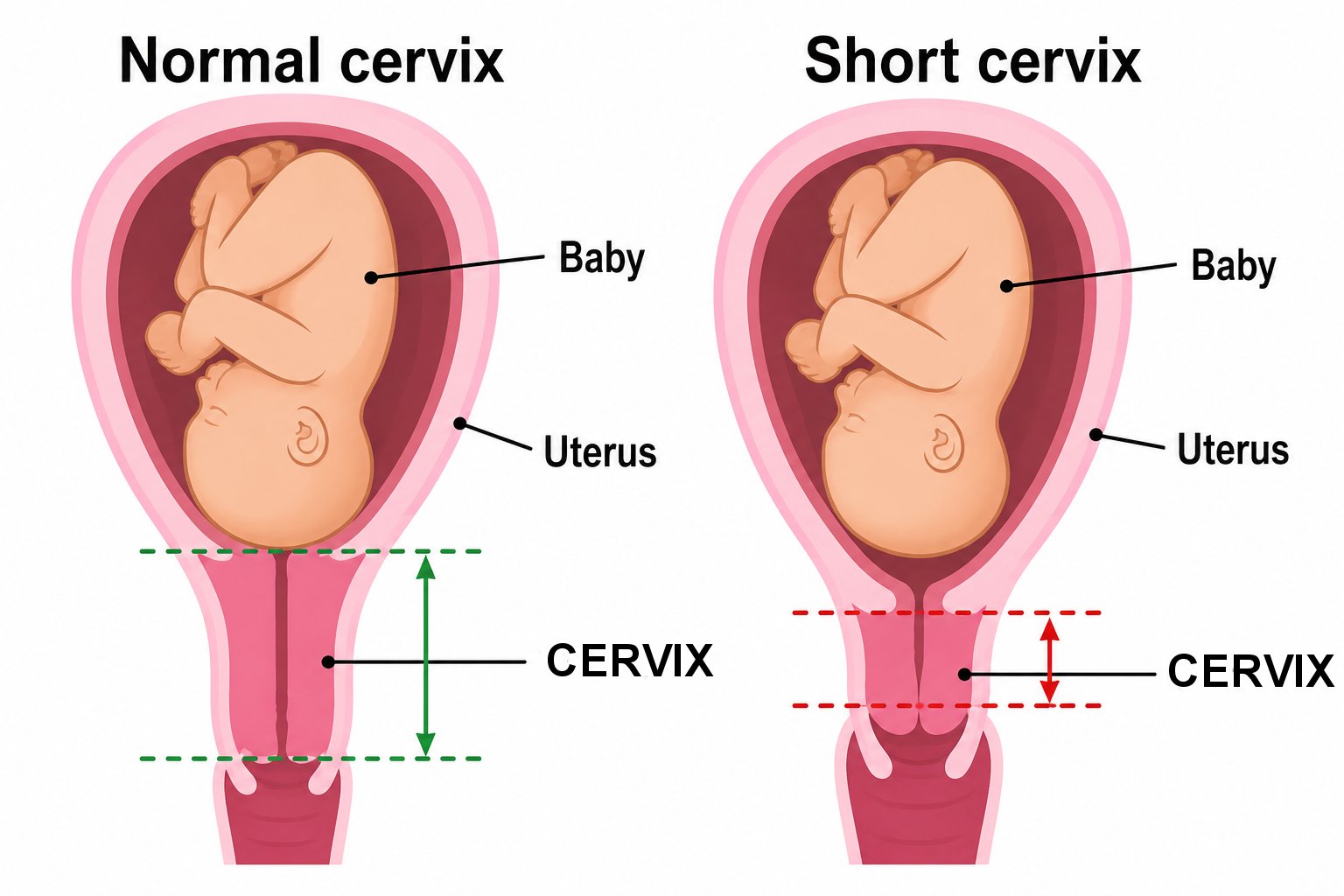
The cervix is the small, lower part of the womb (uterus). It opens into the vagina. It helps hold the baby in the womb.
The cervix is usually about 35 millimeters (about 1 1/2 inches) long, firm, and closed.
Before 24 weeks, doctors call the cervix short if it is less than 25 millimeters (about 1 inch) long.
A short cervix may open too soon. This can raise the chance of an early birth before 37 weeks.
Why can the cervix be short?
Doctors do not always know the cause. A short cervix may be linked to:
- a past birth that injured the cervix
- past surgery on the cervix, such as a cone biopsy or LEEP
- swelling or infection
- a condition present at birth
What treatment may help?
- if you have one baby and the cervix is 20 mm or less before 24 weeks, vaginal progesterone is often advised
- if it is 21 to 25 mm, your doctor may also offer progesterone
- your plan may be different if you had an early birth before or have twins
Progesterone treatment
- progesterone is a hormone made by the body
- it may help lower the chance of an early birth
- the medicine is put in the vagina each night as a pill, capsule, or gel
- your doctor will tell you when to start and stop it; many people use it until 36 or 37 weeks
Cerclage treatment
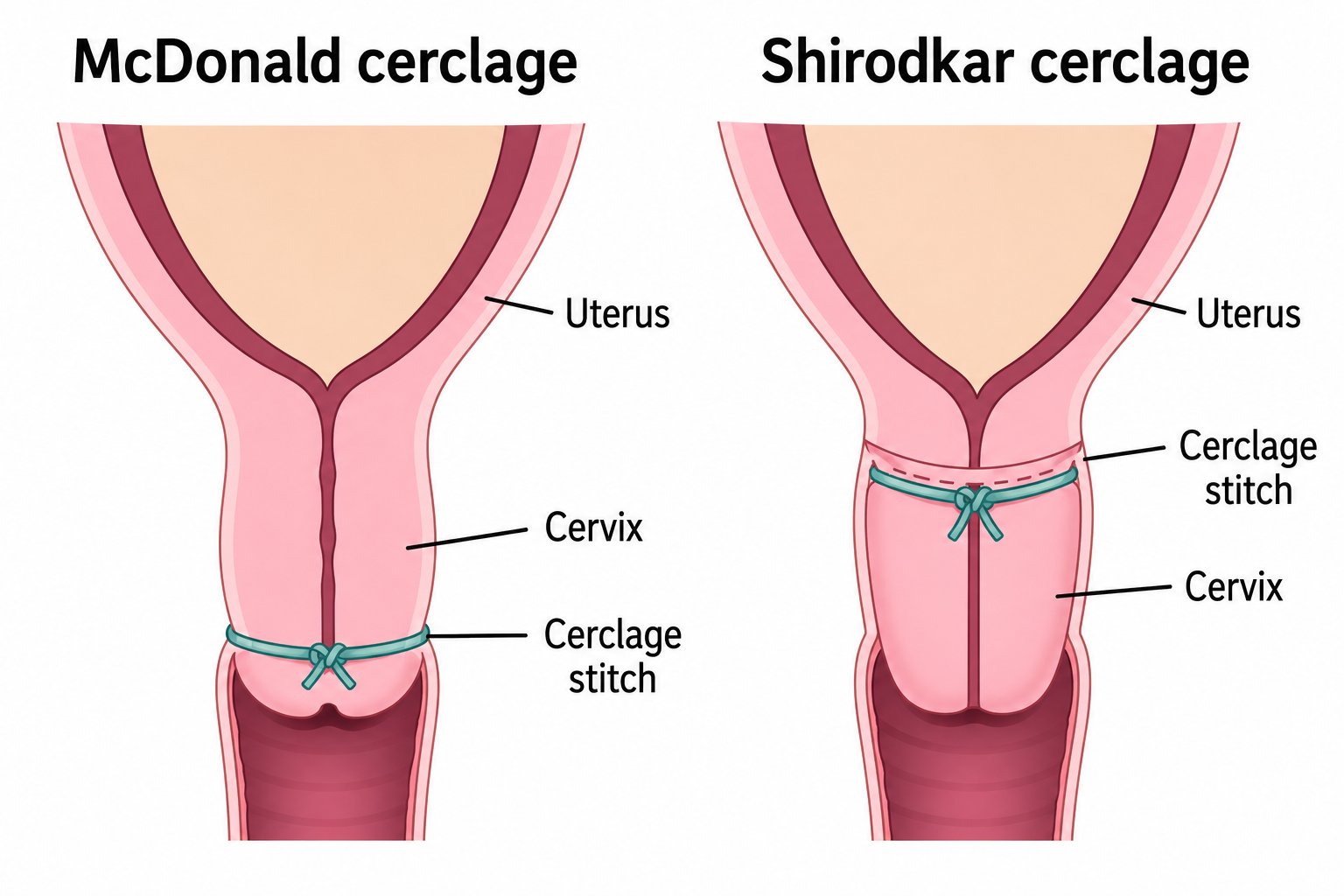
- a cerclage is a strong stitch around the cervix to help keep it closed
- it is usually placed through the vagina while you receive medicine for pain
- the stitch is often removed at 36 to 37 weeks
- your doctor may discuss a cerclage if you had an early birth before, the cervix is opening, or it is very short
Two types of cerclage
McDonald cerclage: the stitch sits lower on the cervix.
Shirodkar cerclage: the stitch sits higher on the cervix.
Your doctor will choose the approach that is best for your situation.
Call your doctor right away for
- cramps that come and go
- pressure low in the pelvis
- new low back pain
- bleeding
- fluid leaking from the vagina
Educational use only. This handout does not replace care from your pregnancy doctor.
Medical references used for this handout
- Society for Maternal-Fetal Medicine (SMFM); Biggio J; SMFM Publications Committee. SMFM Consult Series #70: Management of short cervix in individuals without a history of spontaneous preterm birth. Am J Obstet Gynecol. 2024.
- American College of Obstetricians and Gynecologists. Practice Bulletin No. 234: Prediction and Prevention of Spontaneous Preterm Birth. Obstet Gynecol. 2021;138:e65-e90.
- American College of Obstetricians and Gynecologists. Updated Clinical Guidance for the Use of Progesterone Supplementation for the Prevention of Recurrent Preterm Birth. Practice Advisory. 2023.