Skeletal Dysplasia
When a baby's bones grow in a different way
Skeletal dysplasia is a group of conditions that change how bones grow.
It may affect the arms, legs, chest, back, or head.
Some types cause mild problems. Other types are very serious.
Dwarfism means a person is much shorter than most people the same age. It can have many causes.
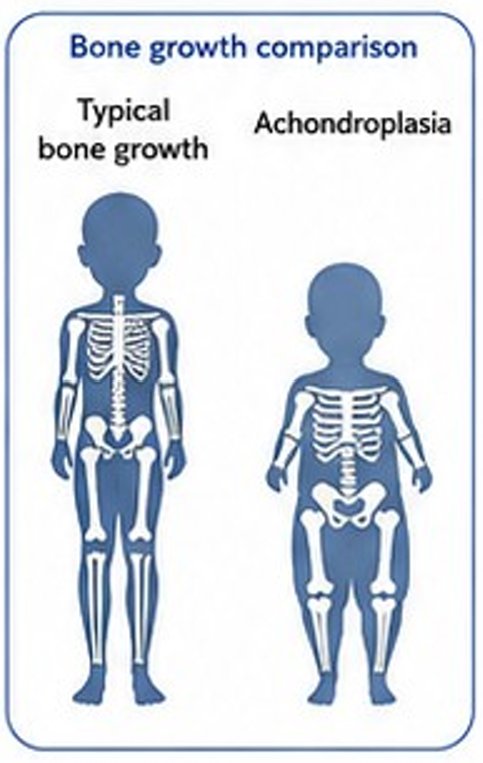
One common type: achondroplasia
- the upper arms and thighs are often short
- the head may look larger and the forehead may stand out
- the trunk is often near usual size
- learning and thinking are usually not affected
How can it happen?
Genes are instructions that tell the body how to grow. A change in a gene can affect how a baby's bones grow.
- the change may start for the first time in the baby
- some types can be passed down from one parent
- some types need a gene change from both parents
- a genetics team can explain the chance for another pregnancy
What tests may be offered?
- a detailed ultrasound to check the bones, chest, head, and back
- more ultrasounds to check growth
- a visit with a genetics team
- testing the placenta or the fluid around the baby to check the baby's genes
- a gene test, gene panel, or exome test
What affects the baby's health?
- the exact type of skeletal dysplasia
- the size of the chest and lungs; some severe skeletal dysplasias can keep the chest and lungs from growing and may not allow the baby to survive after birth
- bone shape, strength, or broken bones
- problems with the spine, airway, or other organs
What happens next?
- meet with a maternal-fetal medicine specialist and a genetics team
- talk about which tests may help
- plan where the baby should be born
- meet the newborn team if special care may be needed after birth
What should I remember?
Skeletal dysplasia is not one disease.
The exact type and how the chest and lungs grow help your care team plan the safest care for your baby.
Educational use only. This handout does not replace care from your obstetrician, maternal-fetal medicine specialist, genetics team, or baby's doctor.
Medical references used for this handout
- Mortier GR, et al. Nosology and classification of genetic skeletal disorders: 2023 revision. Am J Med Genet A.
- GeneReviews. Achondroplasia.
- International Society of Ultrasound in Obstetrics and Gynecology (ISUOG). Patient information on skeletal dysplasia.