Spina Bifida
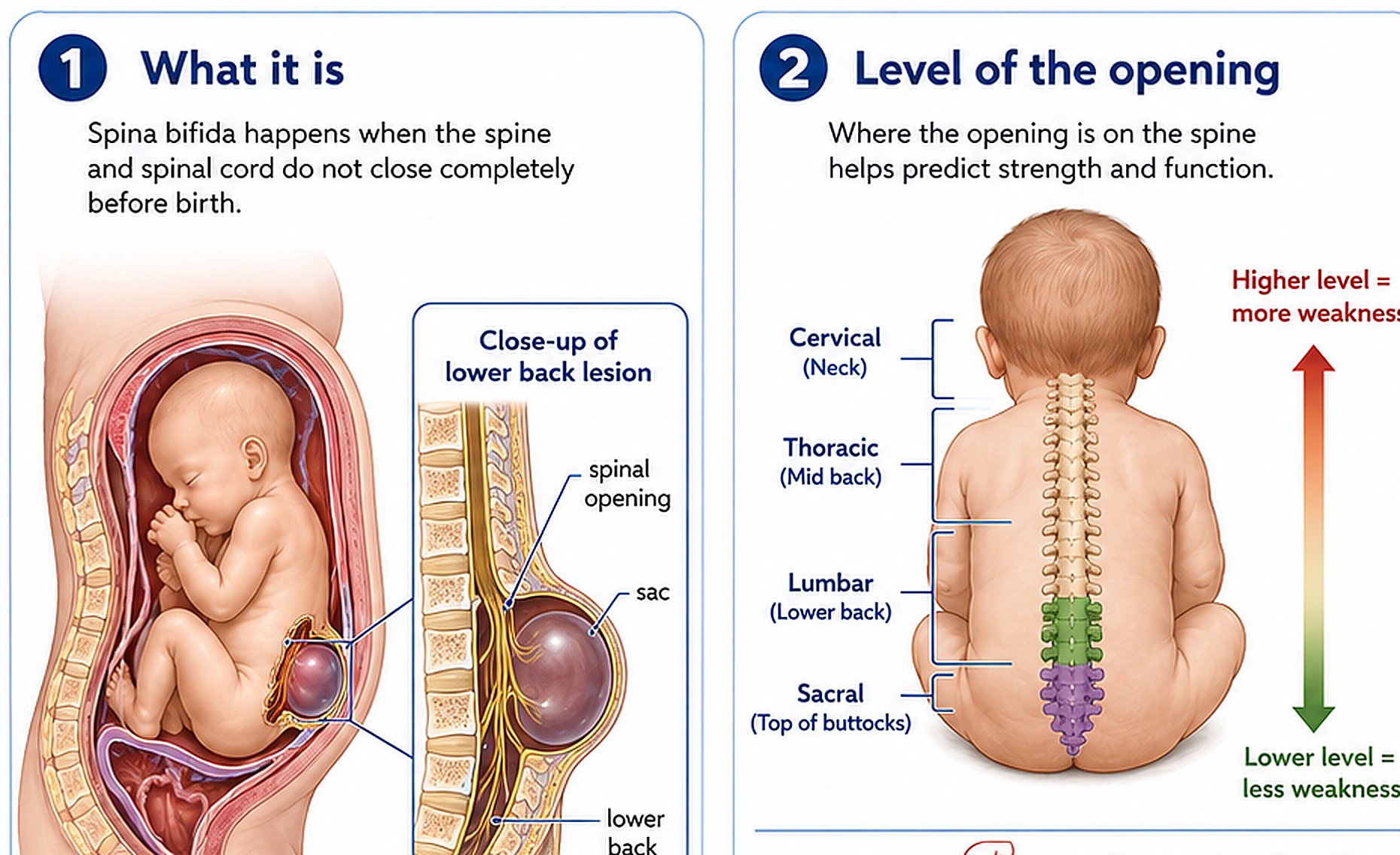
Spina bifida starts very early in pregnancy. Part of the baby's spine does not close all the way.
Open spina bifida, also called myelomeningocele, means the spinal cord and nerves come through an opening in the back.
The level of the lesion means where the opening is on the spine. A higher level often causes more weakness. A lower level often means better leg strength.
What tests are done?
- Detailed ultrasound checks the spine, brain, legs, feet, and other organs
- Fetal MRI (a special scan with more detail) may better show the brain and spine
- Fetal echocardiogram (a detailed heart ultrasound) may be done
- Amniocentesis (a test of fluid around the baby) may be offered to check chromosomes or genes
What does the level mean?
- Thoracic or high lumbar: more leg weakness; a wheelchair or more help with walking may be needed
- Low lumbar: some children walk with braces or a walker
- Sacral: leg strength is often better; some children walk without aids
- bladder and bowel problems can happen at any level
What other problems can happen?
- Hydrocephalus (extra fluid in the brain)
- Chiari II malformation (the lower brain sits farther down than usual)
- weak legs or less feeling in the legs
- bladder or bowel control problems
- foot, hip, or spine problems
What are the treatment choices?
Surgery after birth is the usual treatment. The opening is closed soon after birth to protect the spinal cord and nerves.
Fetal surgery (surgery before birth) may be an option for some families. It may lower the need for a brain shunt and improve walking in some children. It also has risks for the mother and raises the chance of early birth.
Who may qualify for fetal surgery?
Special fetal surgery centers use strict rules. The main study included:
- one baby
- myelomeningocele from about T1 to S1 (upper chest spine to low spine)
- about 19 to 26 weeks
- no major unrelated birth defects
What is the outlook?
The outlook depends most on the level of the opening and how the baby's nerves work.
Care may include neurosurgery (brain and spine care), urology (bladder care), bone and joint care, physical therapy, and rehab.
Many children go to school, play, and grow into adults with active lives.
Medical references used for this handout
- Centers for Disease Control and Prevention. Spina Bifida; Infants, Toddlers, and Children. Updated March 16, 2026.
- ACOG Committee Opinion No. 720 / Society for Maternal-Fetal Medicine. Maternal-Fetal Surgery for Myelomeningocele.
- Spina Bifida Association. Guidelines for the Care of People with Spina Bifida.
- National Institute of Neurological Disorders and Stroke. Spina Bifida.