Echogenic Bowel
When part of the baby's bowel looks bright on ultrasound
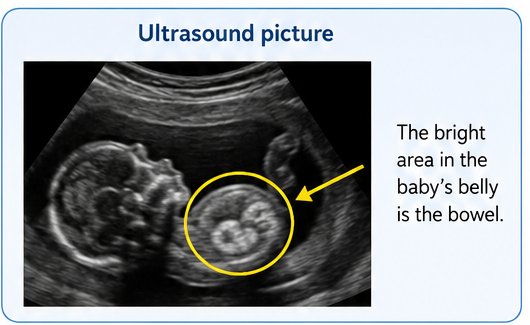
Echogenic means "looks bright."
Bowel means the baby's intestines.
On ultrasound, part of the bowel looks as bright as bone. This is a finding. It is not a diagnosis.
Isolated means this is the only finding after a detailed ultrasound.
What can it mean?
- many babies are healthy
- it may be a buildup of the baby's first bowel movement
- the baby may have swallowed a small amount of blood
- it may be linked to CMV infection or cystic fibrosis
- sometimes no cause is found
What does SMFM recommend?
- if prior chromosome screening was low risk, no more chromosome testing is needed just because of isolated echogenic bowel
- if you have not had screening, cell-free DNA or another screen may be offered
- your care team should check for cystic fibrosis and CMV
- a third-trimester ultrasound should check the bowel and the baby's growth
What tests may be offered?
- a detailed ultrasound
- cystic fibrosis carrier screening for the parents
- blood tests for CMV
- amniocentesis in some cases
- a third-trimester growth ultrasound
What is the outlook?
Most babies with isolated echogenic bowel have a normal outcome.
The outlook may be different when there are other ultrasound findings, infection, cystic fibrosis, or poor growth.
What happens next?
- ask if the finding is isolated
- review any prior screening results
- complete the tests your care team advises
- keep the follow-up ultrasound visit
What should I remember?
Echogenic bowel is an ultrasound finding, not a diagnosis.
When it is the only finding and other tests are normal, most babies do well.
Important: Your care team will choose tests based on your history, prior screening results, and the rest of the ultrasound.
Medical reference used for this handout
Society for Maternal-Fetal Medicine. Consult Series #57: Evaluation and management of isolated soft ultrasound markers for aneuploidy in the second trimester. 2021.