Fetal Growth Restriction (FGR)
When a baby is smaller than expected
Fetal growth restriction (FGR) means your baby is not growing as much as expected based on the correct due date.
Sometimes the baby is naturally small. Other times, the placenta may not be working well enough.
Less often, the baby may have a health condition that affects growth.
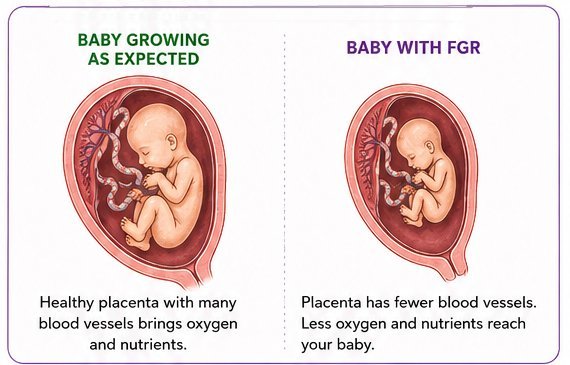
How babies grow
- the placenta carries oxygen and nutrients to your baby
- if the placenta does not work well, growth may slow down
- ultrasound is used to check your baby's size and growth
What can cause FGR?
Sometimes the cause is not known. Causes may include:
- high blood pressure or preeclampsia
- problems with the placenta
- smoking, vaping, alcohol, or drug use
- some infections or health conditions
- some chromosome or genetic conditions
What will be checked?
FGR usually does not cause symptoms you can feel. Your care team may check:
- your baby's measurements on ultrasound
- the amount of amniotic fluid
- blood flow in the umbilical cord and placenta
- your baby's heart rate and movements
What you can do
- go to all prenatal and ultrasound visits
- follow your care team's advice
- do not smoke, vape, drink alcohol, or use drugs
- take medicines only as directed
- ask questions when something is not clear
Call your care team now if:
- your baby is moving less than usual
- you have heavy bleeding, severe pain, or leaking fluid
- you have a severe headache, vision changes, trouble breathing, or sudden swelling
Important to remember
FGR does not mean you caused a problem.
It means your baby needs extra care. With close monitoring and the right plan, many babies with FGR do well.
What your care team may do
Extra ultrasoundsCheck growth and fluid.
Heart-rate testsCheck how your baby is doing.
Doppler studiesCheck blood flow in the cord.
More visitsWatch you and your baby closely.
Delivery planningChoose the safest time for birth.
Educational use only. This handout does not replace advice from your obstetrician or maternal-fetal medicine specialist. Recommendations may be different for each pregnancy.