Fibroids in Pregnancy
Fibroids are growths made of muscle in the wall of the uterus. The uterus is also called the womb.
Fibroids are not cancer.
Many women have fibroids and may not have any symptoms.
Most women with fibroids have a healthy pregnancy and a healthy baby.
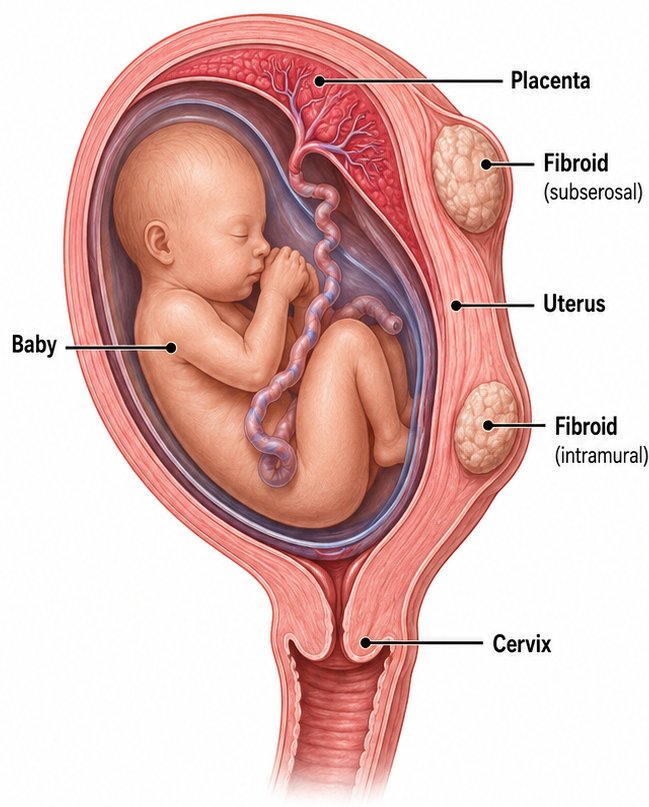
What happens during pregnancy?
A fibroid may stay the same size, grow, or get smaller.
Sometimes a fibroid can cause pain.
How can fibroids affect pregnancy?
- pelvic pain or pressure
- bleeding early in pregnancy
- the baby may lie in a different position
- a higher chance of early birth or cesarean birth
How are fibroids checked?
Most of the time, your care team will use ultrasound to check the fibroids and your baby.
Your doctor may pay special attention to the fibroid's size and location.
What is the treatment?
Treatment depends on your symptoms.
Your doctor may suggest rest, fluids, and pain medicine that is safe during pregnancy.
Surgery is rarely needed during pregnancy.
When should I call my doctor?
- strong or lasting belly pain
- vaginal bleeding
- fever
- contractions or leaking fluid
What should I remember?
Most women with fibroids have a good pregnancy outcome.
Your care team will watch you and your baby and make a plan based on the size and location of the fibroids.