Ventriculomegaly
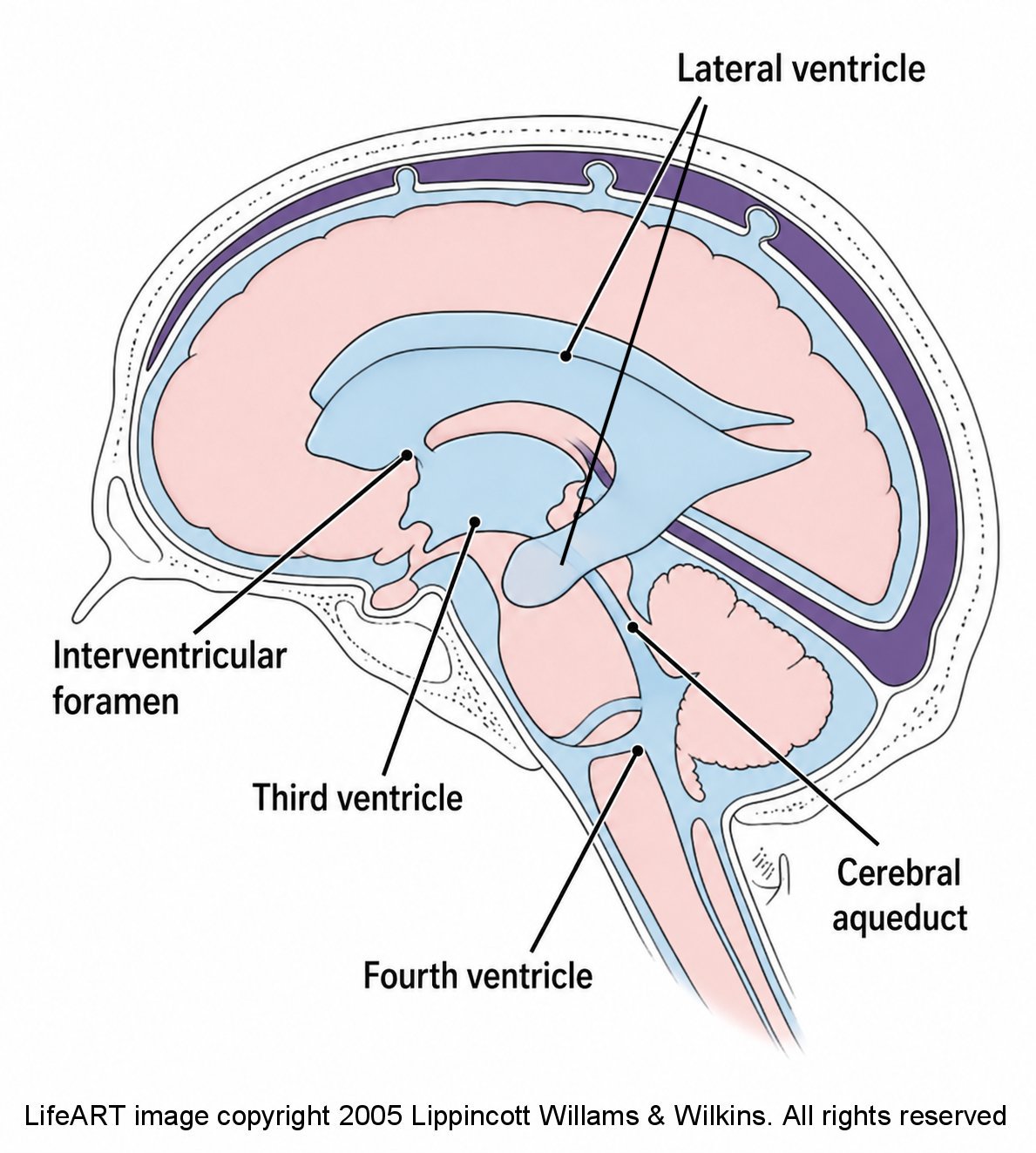
The brain has small spaces called ventricles. They hold fluid that helps protect the brain.
Ventriculomegaly means one or both side ventricles are wider than expected.
It is found when a side ventricle measures 10 millimeters or more on ultrasound.
| Measurement | Group |
|---|---|
| 10 to 12 mm | Mild |
| 13 to 15 mm | Moderate |
| More than 15 mm | Severe |
Why can this happen?
Sometimes no cause is found. Other possible causes include:
- a chromosome or gene condition
- an infection or bleeding during pregnancy
- a problem with how the baby's brain formed
- a problem with the flow of brain fluid
What tests may be offered?
- a detailed ultrasound of the brain, spine, and body
- another ultrasound to check the size again
- amniocentesis to check chromosomes and genes
- tests for CMV and toxoplasmosis
- a fetal MRI for a closer look at the brain
What is the outlook?
When mild ventriculomegaly is isolated, more than 9 out of 10 babies are expected to have normal development.
Most babies with moderate ventriculomegaly also do well, but the chance of development problems is higher.
What affects the outlook?
- how wide the ventricle is
- whether one or both sides are enlarged
- whether the size gets smaller, stays the same, or gets larger
- whether any other findings are seen
Will this change delivery?
Ventriculomegaly alone usually does not change when or how your baby is delivered.
What happens after birth?
Your baby's doctor may suggest an exam, brain imaging, and follow-up of growth, movement, speech, and learning.
Medical references used for this handout
Society for Maternal-Fetal Medicine. Mild fetal ventriculomegaly: diagnosis, evaluation, and management. SMFM Consult Series #45. American Journal of Obstetrics & Gynecology. 2018.
Li X, Hu T, Xiao X. Expert consensus on fetal ventriculomegaly: evidence-based recommendations for 23 key clinical questions. Frontiers in Pediatrics. 2025;13:1678359.