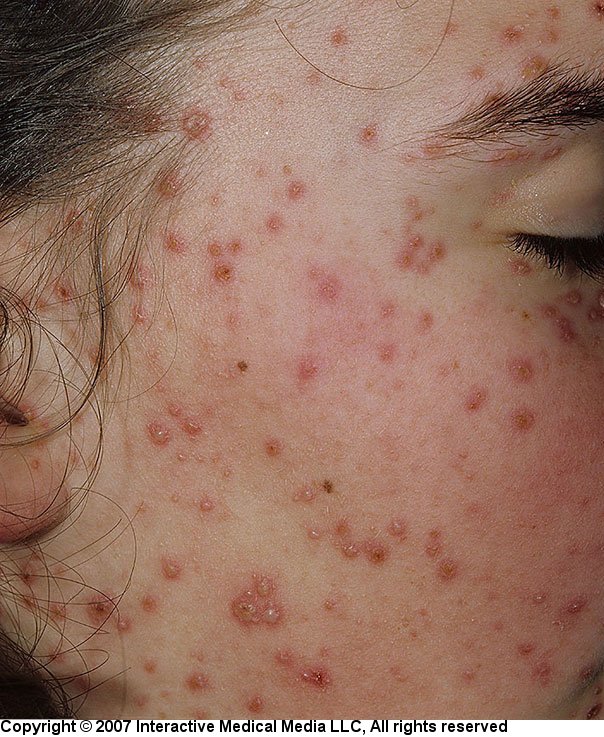
This workflow separates two common clinical scenarios: a pregnant patient with
exposure but no rash, and a pregnant patient who has already developed
acute varicella. Management depends on immunity, exposure timing,
gestational age, maternal severity, and timing relative to delivery.
1. Patient reports exposure or rash
Determine whether this is exposure only or whether the patient already has
a compatible varicella rash or systemic illness.
→
2. Infection-control step
If rash is present or suspected, avoid waiting-room exposure. Use appropriate isolation and
keep patient away from susceptible pregnant patients, neonates, and immunocompromised persons.
3A. Exposure only: confirm significance
Assess source illness, infectious period, proximity, duration, and setting. Higher-risk exposures
include household contact, face-to-face contact, prolonged indoor contact, or exposure to
disseminated/exposed shingles.
→
3B. Rash present: diagnose acute varicella
Typical disease is diagnosed clinically. If confirmation is needed, obtain PCR from vesicular
fluid, scab, or lesion material. Do not rely on IgM alone when lesion PCR is available.
4A. Exposure only: determine immunity
Evidence of immunity includes reliable prior chickenpox/shingles, documented two-dose
varicella vaccination, or positive VZV IgG. If uncertain, obtain VZV IgG urgently.
→
4B. Acute disease: assess severity
Evaluate for pneumonia, hypoxia, dehydration, hepatitis, encephalitis, disseminated disease,
immunocompromise, or clinical deterioration.
5A. Immune after exposure
Reassure. No post-exposure prophylaxis is needed. Advise patient to report fever or rash
if symptoms develop.
→
5B. Uncomplicated acute varicella
Isolate until lesions crust. Provide symptomatic care. Consider oral acyclovir or valacyclovir,
especially if presentation is early and/or gestational age is ≥20 weeks.
6A. Nonimmune after significant exposure
In the United States, offer
VariZIG as soon as possible and within 10 days
of exposure. See
Perinatology.com OBRx: VariZIG.
→
6B. Severe or complicated acute varicella
Hospital evaluation. Use IV acyclovir for severe disease, pneumonia,
encephalitis, hepatitis, disseminated infection, hypoxia, or significant clinical deterioration.
7A. After post-exposure prophylaxis
Counsel patient to report rash promptly. Monitor for symptoms during the incubation window.
If rash develops, switch to the acute varicella pathway.
→
7B. Maternal warning signs
Urgent evaluation for cough, dyspnea, chest pain, tachypnea, hypoxia, persistent fever,
severe headache, photophobia, confusion, dehydration, or rapidly progressive rash.
8. If infection occurs before 20–28 weeks
Counsel regarding the low but important risk of fetal varicella syndrome. Refer to MFM.
Plan detailed ultrasound, commonly at least 5 weeks after infection or at 16–20 weeks.
→
9. Ultrasound surveillance
Evaluate fetal growth, intracranial anatomy, ventricles, limbs, eyes, echogenic foci/calcifications,
hydrops, and other structural findings. Amniotic fluid VZV PCR is individualized.
10. If rash occurs near delivery
Notify pediatrics/neonatology urgently. Highest neonatal risk is maternal rash from
5 days before to 2 days after delivery.
→
11. Delivery planning
Timing and mode of delivery are individualized. If maternal and fetal status permit and rash
occurs near term, consider avoiding planned delivery for approximately 7 days after rash onset
to allow maternal antibody transfer.